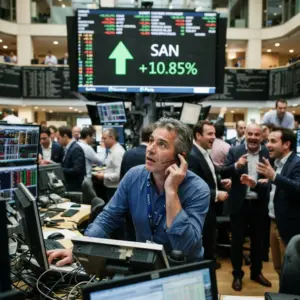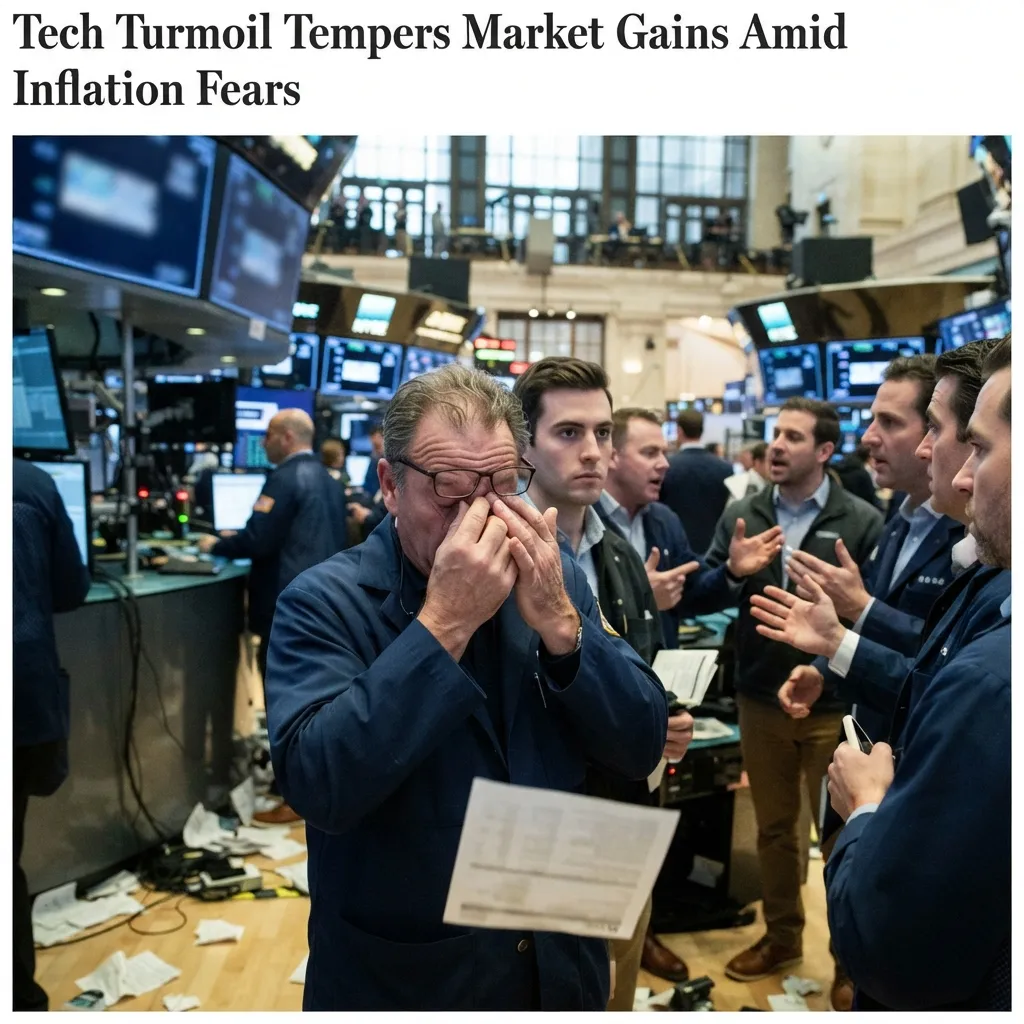
Wall Street managed to claw back a significant portion of its early losses on Wednesday, though the indices remained mixed as a volatile session for artificial intelligence stocks finally began to stabilize. The S&P 500 ended slightly lower by 0.3 percent, a modest dip considering it had plunged as much as 3.2 percent during the morning rush. Similarly, the Nasdaq composite recovered from a steep mid-day drop of nearly 5 percent to finish down just 0.6 percent. Meanwhile, the Dow Jones Industrial Average bucked the trend entirely, closing with a slight gain of 0.3 percent.
The recovery was driven largely by big tech names finding their footing after an initial rout. Nvidia saw some stability toward the end of the day but still closed down 3.9 percent after plunging more than 9 percent at one point. Other heavyweights like Broadcom and Microsoft also narrowed their losses significantly, while Meta and Salesforce actually posted gains. Financial services provided additional support for the broader market, with payment giants Visa and Mastercard both seeing climbs near two percent. Despite these recoveries, analysts suggest that investors are becoming increasingly skeptical that current AI valuations can be justified by actual profits.
Beyond the volatility in tech, macroeconomic headwinds continued to weigh on sentiment. New data revealed that inflation remains stubborn, with prices rising at a rate of 3.8 percent in October according to the Federal Reserve’s preferred metric. This persistence suggests that interest rates may stay higher for longer, possibly leading to another rate hike in December to bring inflation closer to the bank’s two percent goal. These fears were compounded by escalating trade tensions and planned tariff hikes against major global partners, adding further pressure to consumer costs across the board.
Adding to the complexity is a geopolitical climate fueling energy price spikes, as conflicts involving Iran pushed Brent crude oil up to nearly ninety five dollars a barrel_ Although recent GDP revisions show surprising resilience in overall economic growth reaching a four point three percent annual rate, there are growing concerns regarding who is driving that expansion. While wealthy households and tech firms investing in infrastructure continue to spend heavily, evidence suggests lower income families are leaning more on credit to survive rising living costs just as markets head into a shortened holiday week_